
Last updated October 17, 2026
 Metal roofing
 Architectural shingles
 Tile roofing
 GAF
GAF Owens Corning
 Flat & low-slope
Free roof inspection with deck photos before we talk money - GAF and Owens Corning certified installation
Roofing Warning Signs: A Dallas Homeowner’s Reference Guide
A curling shingle at the ridge line is a 6-month warning. A brown ring on your bedroom ceiling is a 6-week bill. Most roof warning sign lists are written in reverse, describing the damage after it’s already expensive, not the early indicators that show up six to eighteen months before a leak. This guide is organized by how early a sign appears in the failure timeline so you can act at the cheap fix stage, not the emergency stage. For a broader overview, see our Complete Guide to Roofing in Dallas. Dallas homeowners who learn to read the earlier warning signs routinely save thousands on repairs that never should have become replacements.
Styles & brands we work with
Quick Answer
The earliest roof warning signs a Dallas homeowner will notice are granule accumulation in gutters, shingle edges beginning to curl or cup, and small areas of flashing pulling away from chimneys or pipes. These appear months before water ever enters the home. Interior stains on ceilings or attic rafters mean active moisture intrusion has already begun and should be addressed within the week, not next season. Most asphalt-shingle repairs in Dallas run $350 to $900 when caught at the early warning stage, versus $4,500 to $12,000 for a full replacement after structural damage sets in.
Table of Contents
- The Timeline of Roof Failure: When Each Warning Sign Appears
- Granule Loss: Reading the Clock on Your Shingles
- Interior Warning Signs That Appear Before Exterior Damage
- Hail Bruising vs. Normal Weathering: What Insurance Actually Covers
- The Three Flashing Failures Common in Dallas Construction
- Sagging Rooflines and Soft Decking: The Same-Day Emergency
- Seasonal Timing: When Dallas Weather Accelerates Roof Deterioration
- Common Mistakes to Avoid
- When to Call a Professional
- Frequently Asked Questions
- The Bottom Line
The Timeline of Roof Failure: When Each Warning Sign Appears
Roofs don’t fail all at once. They fail on a schedule, and that schedule is remarkably predictable once you understand what to look for. Here’s how the timeline typically plays out on a Dallas roof, working backward from the moment water enters your living space:
- 18 to 24 months before a leak: Granules begin shedding at an elevated rate. You’ll find them in gutters after every rain, not just the first storm of spring. Shingle edges start to look thin where the granule layer has worn away.
- 12 to 18 months before a leak: Shingle corners begin to curl upward slightly. Flashing around pipes and chimneys shows small gaps where sealant has dried and cracked. You can spot these from the ground with binoculars.
- 6 to 12 months before a leak: Curling becomes pronounced. The shingle surface develops small blisters or cracks. Pipe boot rubber shows visible splits. Valley flashing begins separating from the shingle edge.
- 2 to 6 months before a leak: You find a shingle or two in the yard after a windstorm. The attic shows early moisture signs: darkened rafters, damp insulation, or a musty smell that wasn’t there last spring.
- The leak itself: Water has now made it through the underlayment and decking. You see a stain on the ceiling or wall. This is the point most homeowners first notice anything is wrong, and by now the repair cost has multiplied.
In our experience working across Dallas neighborhoods from Lakewood to Richardson, the homeowners who catch signs at stage one or two spend a fraction of what stage-five homeowners pay. The pattern is consistent. Early detection costs hundreds. Late detection costs thousands.
Granule Loss: Reading the Clock on Your Shingles
Asphalt shingles are made of a fiberglass or organic mat saturated with asphalt and covered with ceramic granules. Those granules aren’t decorative. They protect the asphalt from the sun’s UV radiation, which is relentless in Dallas from May through September. When granules go, the asphalt underneath bakes, dries, and cracks.
Here’s the thing most guides get wrong: finding granules in your gutter after one storm is not a warning sign. That’s normal. Shingles shed loose surface granules throughout their life, especially after heavy hail or a first hard rain following a long dry spell. The warning sign is the pattern of granule loss.
How to Tell Normal Granule Loss from a Problem
Check your gutters after the next three rains. Here’s the difference:
- Normal: You find a light dusting of granules, mostly caught in the corners of the gutter run. The granules are mixed colors, since they came from different parts of different shingles. No single area of the roof looks bald or patchy.
- Warning: You find thick piles of granules in the same gutter location after every single rain. When you look at that section of roof from the ground, the shingles appear shiny or glossy where granule loss is concentrated. You may see patches that look darker or lighter than surrounding shingles.
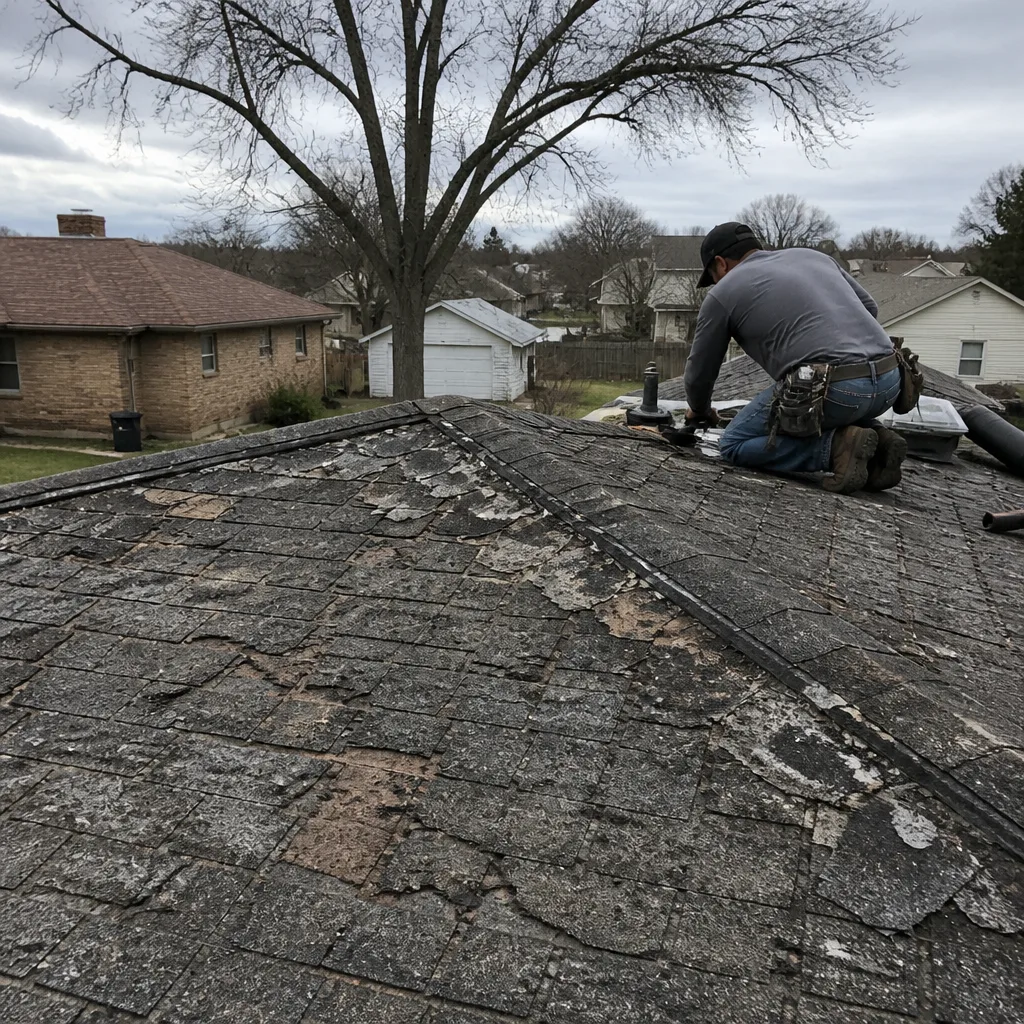
- Late stage: The asphalt surface is visibly exposed. Shingles look black or dark gray instead of their original color, especially on the sun-facing slope. This is months away from cracking through.
The west- and south-facing slopes in Dallas lose granules faster than north- and east-facing slopes. That’s just physics: more sun exposure, faster UV degradation. If one slope of your roof looks dramatically different from the others, that’s often the explanation. But it also means that slope will fail first, so it deserves closer monitoring.
Interior Warning Signs That Appear Before Exterior Damage
Here’s a truth that surprises most Dallas homeowners: some of the earliest warning signs aren’t on the roof at all. They’re in your attic, and they show up before you can see anything wrong from outside. Water moves through a roof system long before it pools enough to stain a ceiling.
Go into your attic on a bright afternoon. Don’t turn on the light. Let your eyes adjust and look for these specific indicators:
- Dark streaks or stains on the underside of the roof decking: This is the plywood or OSB sheathing you can see between the rafters. Dark, irregular-shaped stains that follow the seams between decking panels are almost always moisture marks. They indicate water has been entering repeatedly, not just once.
- Damp or discolored insulation: Fiberglass insulation turns darker and loses its loft when it gets wet. Cellulose insulation clumps. Look especially around the perimeter where the roof meets the exterior walls, and around any penetration like a vent pipe or chimney.
- Water rings or tide marks on rafters: When water runs down a rafter and evaporates, it leaves a faint, wavy line. Multiple lines at different heights mean multiple wet events over time. That’s active intrusion, not a one-time condensation event.
- Rust on nail heads or metal connectors: Roofing nails driven through the decking will rust if moisture is present from above. A scattering of rusted nail heads in one area points to a leak directly above that spot.
- Light visible through the decking: On a bright day with no attic light on, look for pinpoints of daylight coming through the roof. If light gets through, water gets through.
One caveat specific to Dallas: summer attic temperatures regularly hit 120 to 140 degrees. That heat dries moisture quickly, which is good for preventing rot but bad for detection. By the time you see a ceiling stain in August, the leak has likely been active for weeks or months on days when humidity was high enough to leave a visible mark. Don’t assume a small stain is a small problem. Trace it back to its source before it disappears in the next dry spell.
Hail Bruising vs. Normal Weathering: What Insurance Actually Covers
Dallas gets more hail than almost any major city in the country. The National Weather Service has recorded some of the costliest hail events in U.S. history in the Dallas-Fort Worth metroplex. That means insurance claims are a regular part of roofing life here, and knowing the difference between hail damage and normal weathering is the difference between a covered claim and a denial letter.
Hail damage and age-related granule loss look different up close. Here’s how to tell them apart:
The Flashlight Test for Hail Bruising
- Put a ladder up to the edge of the roof and examine a section of shingle you can reach without walking on the roof plane. Early morning or late afternoon light is best.
- Hold a flashlight at a low angle to the shingle surface so it rakes across, not straight down. This casts shadows that reveal texture.
- Look for circular or crescent-shaped indentations where granules are missing inside a defined impact point. Hail bruises are localized, typically 1/2 inch to 2 inches across, and often have a darker center where the asphalt mat is exposed.
- Run a thumb over the suspected bruise. If you feel a depression, that’s an impact site, not normal wear. Normal granule loss is smooth and spread across the entire shingle face.
The distinction matters because insurance adjusters look for the same thing. Uniform, widespread granule loss with no defined impact points reads as normal weathering, which is excluded from most homeowner policies. Scattered, random, repeated impact marks with granule displacement read as hail damage, which is generally covered. Even so, some claims get denied when the adjuster argues the bruising is old. A Roof Repair in Dallas professional can assess bruises and help document the difference before a claim is filed.
One word of caution: don’t climb onto a roof with pitch steep enough that you can’t comfortably stand, and never walk a roof after a hail storm when granules are loose underfoot. If the slope is steeper than 6-in-12, this is a job for someone with proper safety equipment and training. The risk of a fall is greater than the claim documentation.
The Three Flashing Failures Common in Dallas Construction
Flashing is the metal or rubber material used to seal roof penetrations and transitions. Most roof leaks we see in Dallas are not caused by shingles wearing out. They’re caused by flashing failing silently. Here are the three patterns we see most in homes built across Dallas, Plano, and the surrounding suburbs:
1. Chimney Step Flashing Separation
Chimney step flashing is installed in a staircase pattern where the chimney meets the roofline. Each metal step is cut to overlap the shingle below it, and a counterflashing is set into the chimney mortar. The most common failure here in Dallas is the mortar joint drying out and cracking, especially on the south-facing side, which bears full summer sun. When the mortar fails, the metal pulls loose and water tracks down behind it.
What you see from the ground: Rust-colored staining on the chimney bricks, or patches of sealant that have cracked and pulled away from the metal. Binoculars help. If you see gaps anywhere in the step line, it’s a warning sign.
2. Pipe Boot Cracking
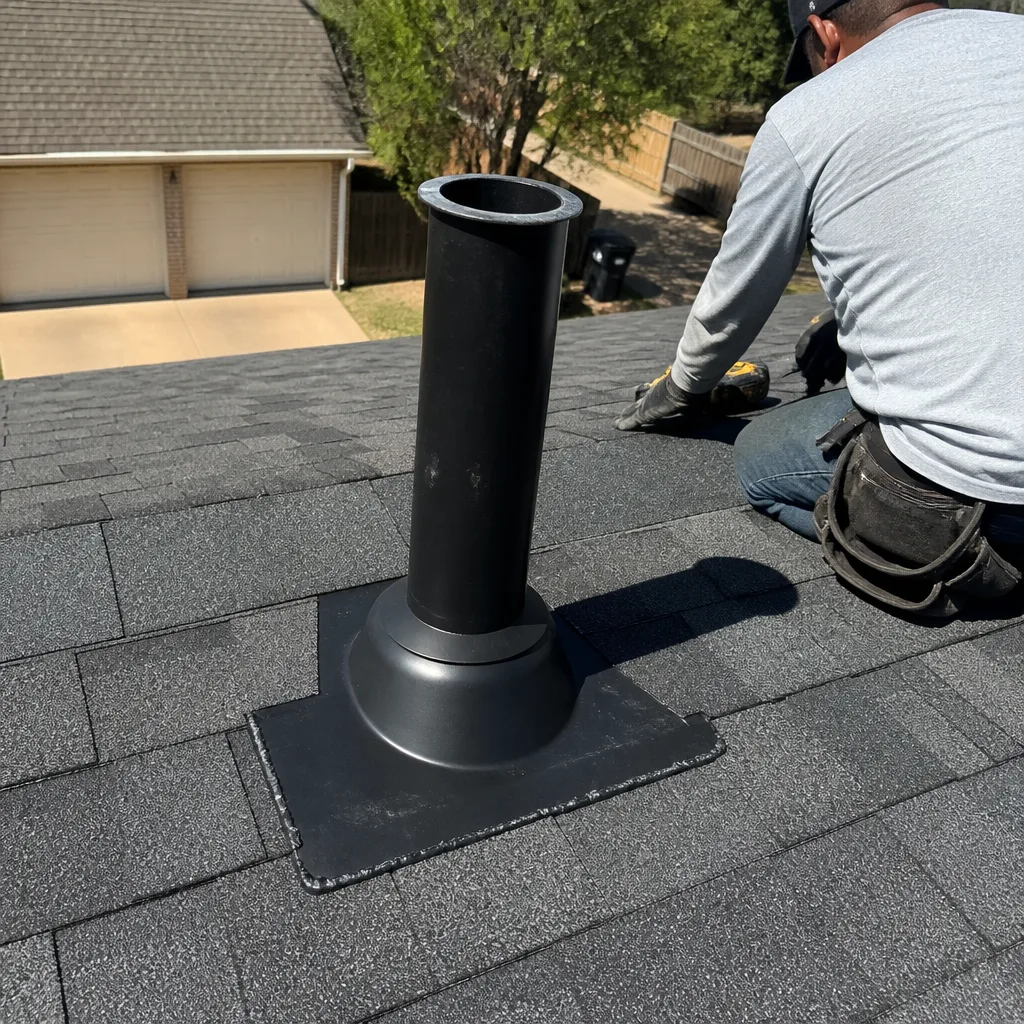
Every plumbing vent, furnace flue, and roof penetration is sealed with a flexible rubber boot that fits over the pipe and sits under the shingles. Dallas heat degrades rubber quickly. After 8 to 12 years, the rubber gets brittle and starts splitting at the point where it stretches over the pipe. A pipe boot crack is small, often less than an inch, but it channels water directly into the attic every time it rains.
What you see from the ground: Gray or white pipe collars that look cracked or have a visible gap between the rubber and the pipe. A pipe boot replacement is one of the cheapest repairs we make, typically under $300 total, and it’s the kind of thing that becomes a $2,000 ceiling repair if ignored for a season.
3. Valley Flashing Separation
Roof valleys are the interior angles where two roof planes meet. Water runs concentrated through valleys, so the flashing there takes more water flow than any other part of the roof. On asphalt shingle roofs, valley flashing is often installed as a W-shaped metal channel or as overlapping shingles. When the metal channel separates from the shingle edge or the overlapping shingles curl, water slips underneath.
What you see from the ground: A ridge line of exposed metal in the valley that has lifted or twisted away from the shingles. You may also see granule buildup trailing down the valley, which means water is moving there fast enough to strip shingle granules. That’s an early warning that the valley is routing water incorrectly.
All three patterns share something: they get worse every time it rains, and the Roofing Company in Dallas you choose should inspect all of them during any roof service visit. In our experience, a homeowner who reports one flashing issue often has two or three, because the underlying cause is age and heat exposure, not a single random event.
Sagging Rooflines and Soft Decking: The Same-Day Emergency
Everything up to this point has been about catching problems before they become structural. A sagging roofline is different. It is structural already. And it needs attention the same day you notice it.
A roof that sags between rafters or dips visibly along a ridge line means the decking below the shingles has been repeatedly wetted and has lost its structural integrity. The decking is the plywood or OSB layer that holds the shingles and distributes the roof load to the rafters. When decking rots, it softens. A soft spot on the roof is not safe to walk. It can collapse under the weight of an adult.
If you see a sagging roofline from the street or your yard, do not climb onto the roof. Here’s what to do instead:
- From inside the attic, identify the sag location and avoid storing anything below it.
- Check for any wet insulation and active water entry in that area.
- Contact a professional roofing company the same day. A structural decking issue can be assessed without walking the softened area, using aerial photos, ladder line access, or temporary reinforcement.
- If the sag is near an exterior wall or chimney, it may mean water is entering through that penetration and running inside the wall cavity, not just into the attic. This should be looked at alongside the decking.
A soft spot on the deck, found by the roofer during an inspection, is treated as a structural emergency. The repair involves cutting out the rotted sheathing, inspecting the rafters beneath, and replacing the decking before reinstalling shingles. This is a repair that often exceeds $2,500, depending on how much decking is involved. It is also the kind of repair that would have been far cheaper six to eighteen months earlier, when the leak that caused it was still at the flashing or shingle stage.
Seasonal Timing: When Dallas Weather Accelerates Roof Deterioration
Dallas weather is not gentle on roofs. It swings from hundred-degree dry heat to violent spring storms to occasional deep freezes, sometimes within a single calendar year. Understanding which seasons stress the roof in different ways-covered in our Seasonal Roofing Care for Dallas: Year-Round Homeowner’s Guide-helps you schedule inspections and interpret warning signs.
- March through May (storm season): Severe thunderstorms, high winds, and hail are most common from late March through May. This is when flying debris damages shingles, wind-driven rain finds every flashing gap, and hail bruising appears. Inspect after the first major storm of spring, not the first rain.
- June through September (heat season): Attic temperatures regularly exceed 130 degrees. Shingles and rubber flashing cure faster in sustained heat, becoming brittle. UV radiation degrades the asphalt mat wherever granules have already worn thin. Heat cuts the lifespan of a south-facing roof slope by several years compared to a north-facing slope.
- October through November (fall): Leaves accumulate in valleys and gutters, damming water behind them. Trapped debris keeps the roof wet longer after each rain, accelerating decking rot in valleys. Clean gutters before Thanksgiving, or have them cleaned during an inspection.
- December through February (winter): Freeze-thaw cycles stress sealants and flashing. Ice expands in small cracks, widening them over repeated freezes. Dallas rarely gets deep snow, but the freezes are hard on old roofs, especially those already in the 18-to-24-month window before a leak.
Given this cycle, the most valuable inspection window for Dallas homeowners is October, after summer heat damage has done its work and before the wet season arrives. A Roof Replacement in Dallas is a major decision, and a fall inspection gives you months to plan and budget before spring storm season. A spring inspection after the first big storm catches hail and wind damage while still fresh for a claim.
Common Mistakes to Avoid
- Walking the roof to inspect it without knowing its condition. Walking on a roof with soft decking, loose granules, or a steep pitch is how serious injuries happen. A professional can assess most warning signs from the ground with binoculars or from a ladder line. Don’t put your weight on a roof that hasn’t been cleared as safe.
- Treating every gutter full of granules as an emergency. One storm’s worth of granule shedding is normal. Three storms in a row with visible granule buildup in the same downspout means you have a real problem forming. Learn to distinguish the two before you spend money.
- Ignoring a small interior stain because it dried. Dallas heat evaporates moisture quickly, but the path the water took through the roof system remains. The stain comes back with the next good rain, and each cycle does more decking damage. Trace the stain to its source even when it’s dry.
- Filing an insurance claim for normal weathering. Widespread granule loss with no defined impact marks is age and sun, not hail. Claims for this are typically denied. Have a professional assessment before you file, so you know whether the damage pattern reads as hail bruising or age.
- Caulking over flashing failures instead of replacing the flashing. Caulk and sealant are temporary. They may buy a few months, but they fail again at exactly the wrong time, and the water damage beneath them continues. Flashing replacements are inexpensive relative to the damage they prevent.
- Waiting to see if a roof problem gets worse before acting. Roofs don’t self-heal. The timeline section of this guide exists because every week of delay moves you down the failure curve. Each stage costs more than the last.
- Choosing a contractor based only on online price estimates. Without an inspection, any price is a guess. A written price after a physical inspection, with line items for decking, flashing, and underlayment, is the only number that means anything. Tilehurst Roofing Dallas puts that written price in your hands before any work starts.
When to Call a Professional
Some warning signs are informational. They mean keep watching. Others are actionable. They mean call today. You should call a roofing professional the same day if you see a sagging roofline or find a soft spot on the decking, if you find water actively entering the attic during a rain, if a shingle or flashing piece blows off in a storm, or if you notice a ceiling stain that has grown since the last rain. A stain that you can trace to a specific leak is the final warning sign in the timeline, and the next rain will worsen it. Tilehurst Roofing Dallas offers free estimates in Dallas, and a live person answers every call, 24 hours a day, 7 days a week. Call (903) 499-4275 and we’ll schedule an inspection at a time that works for you, give you a written price before any work starts, and put every guarantee in writing before a single nail is driven.
Frequently Asked Questions
Most asphalt-shingle roof repairs in Dallas run between $350 and $900, depending on the specific issue. Small flashing repairs like a pipe boot replacement typically fall in the $250 to $450 range. Repairing a valley flashing issue might run $500 to $900 depending on length and whether shingles need to be lifted and reinstalled. Structural decking repairs start around $1,500 and go up from there based on how much sheathing is replaced. Call (903) 499-4275 for an exact quote on your specific roof, estimates are free.
The earliest signs of roof damage in Dallas are elevated granule loss in gutters, early shingle curling at edges, and small separation points in flashing around chimneys and pipes. These appear 12 to 24 months before a leak and can be identified with a ground-level binocular inspection. Interior signs in the attic like dark streaks on decking, damp insulation, and rusted nail heads indicate moisture intrusion has already begun and should be investigated within the week.
Insurance covers roof replacement when damage is caused by a covered event such as hail, wind, or a falling branch, provided the damage exceeds your deductible and hasn’t been excluded for age or lack of maintenance. Hail damage in Dallas is the most common covered cause, and damage must show as defined bruising, not normal weathering. Normal granule loss, cracked shingles from age, and flashing failure are typically excluded as maintenance issues. Have a professional inspect and document before filing a claim so the damage pattern is accurately characterized.
You should inspect your roof twice a year in Dallas: once in October, after summer heat damage, and once in early April, after the first major storm of spring. These two inspections catch the seasonal stresses that each cause specific kinds of damage. If you’ve had hail in your neighborhood, inspect within two weeks of the storm. If you find granules in the gutters after three consecutive rains, inspect that slope closely for accelerated wear.
You can inspect your roof from the ground with binoculars and from inside the attic without climbing onto the roof surface. You should not walk on a roof unless you have completed fall-protection training, you know the roof’s load-bearing condition, and the pitch is low enough to maintain safe footing. If you’re unsure whether the roof is safe to walk, treat it as unsafe. A professional can complete a full inspection without putting you at risk.
An asphalt shingle roof in Dallas lasts 15 to 20 years on average, depending on slope orientation, ventilation, and material quality. South- and west-facing slopes age faster than north- and east-facing slopes, sometimes by three to five years. Higher-performance products from manufacturers like CertainTeed, GAF, and Tamko can extend lifespan with improved granule retention and wind resistance. Poor attic ventilation can cut lifespan by several years by keeping the shingle surface hotter than the manufacturer’s rated temperature.
The Bottom Line
The difference between a $400 flashing repair and a $9,000 roof replacement is timing. Dallas weather cycles stress roofs in predictable ways: spring hail, summer heat, fall debris, winter freeze-thaw. Reading the early warning signs, granule loss in the gutter, curling at the shingle edge, small flashing gaps, attic moisture marks, lets you intervene when the problem is still contained. Avoiding the roof walk when it’s not safe, distinguishing hail bruising from weathering before filing a claim, and getting a written price before any work starts protects you from the second cost: bad repairs by bad operators. A roof gives you warnings. The question is whether you’re reading them. Explore more guides & resources to stay ahead of costly repairs.
If you’re seeing any of the signs in this guide, or if you’re not sure what you’re looking at, start with a free estimate from Tilehurst Roofing Dallas. We’re the local Tilehurst Roofing Dallas home team, part of the Kingswell family of roofing companies founded in 2000. Call (903) 499-4275. A live person answers, every time, any hour.
Written by Greg Holloway, Owner at Tilehurst Roofing Dallas, serving Dallas since 2000.
See the difference
 Before
 After
After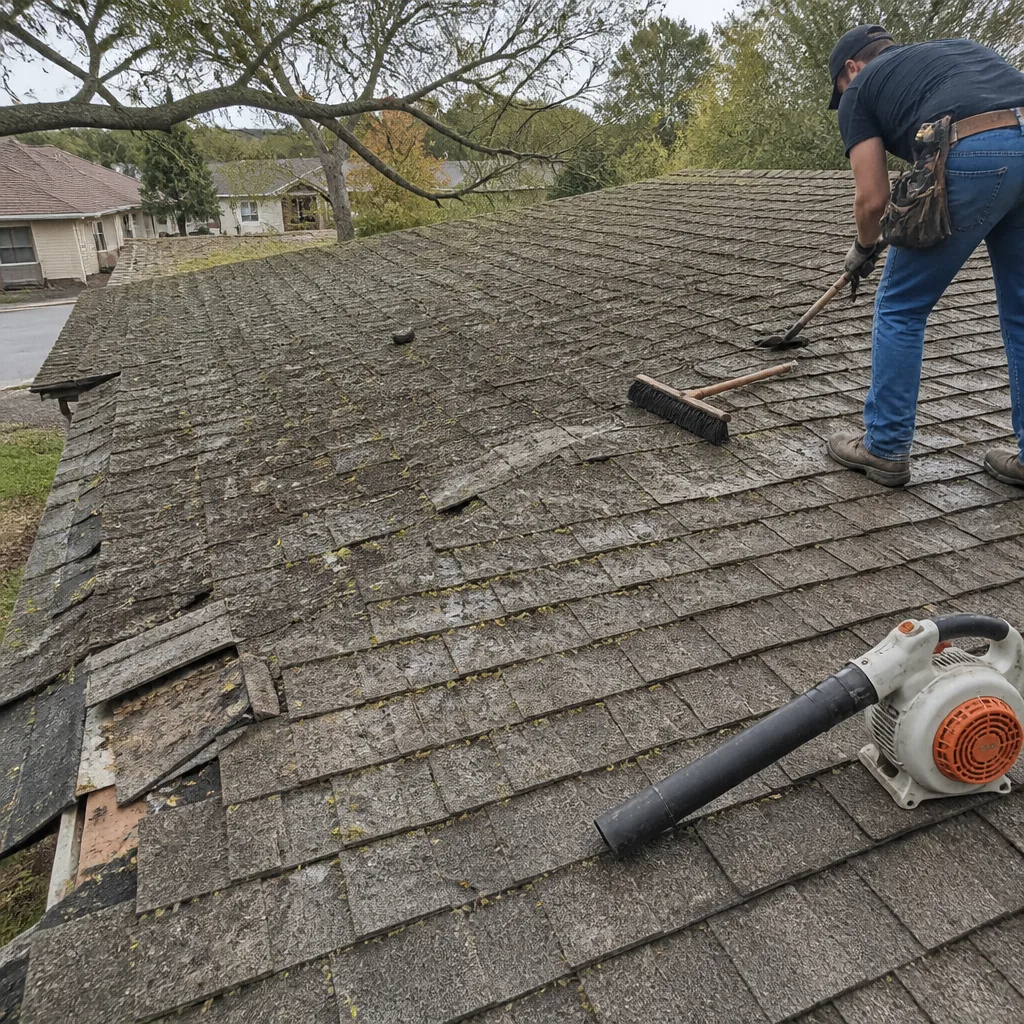 Before
 After
After Before
 After
After